

New Scam Victim Basics: 14 Stages of Scam Victim Recovery
A SCARS Institute Guide to the Recovery Process
The SCARS Institute 14 Stages of Scam Victim Recovery
Understanding the path from recognizing the scam and establishing safety to processing trauma, rebuilding your life, and continuing your recovery.
A SCARS Institute Guide to Understanding Your Recovery Journey
Key Topics:
- Recognizing the scam, establishing safety, and accepting support
- Understanding the deception and managing its emotional effects
- Addressing trauma, grief, shame, and barriers to recovery
- Rebuilding judgment, relationships, and daily life while continuing your recovery
Quick Overview
The Most Important Things to Know
-
Recovery begins with recognizing that you were the victim of a crime and taking steps to protect yourself from further harm. End contact with the criminals, secure your accounts and personal information, preserve evidence, and report the scam. Shock and confusion can make these tasks difficult, so ask a trusted person for help when you need it.
-
Accepting support and establishing emotional stability provide a foundation for recovery. A structured support community, knowledgeable guidance, and a qualified trauma therapist can help you understand your reactions and manage daily life. Feeling calmer after the initial crisis is progress, but trauma, grief, and other consequences still require attention.
-
Learning how the scam worked helps you understand the criminal’s deception and the decisions you made under its influence. Recovery also requires addressing shame, self-blame, grief, and trauma, as well as recognizing resentment, resistance, and avoidance when they interfere with your progress. Honest participation and a willingness to consider guidance help you move through these difficulties.
-
As recovery continues, you rebuild judgment, agency, boundaries, relationships, and daily routines through practice and learning. You begin to understand the scam as part of your life history while continuing to address its consequences. Recovery requires ongoing attention, informed decisions, and support when new challenges arise.
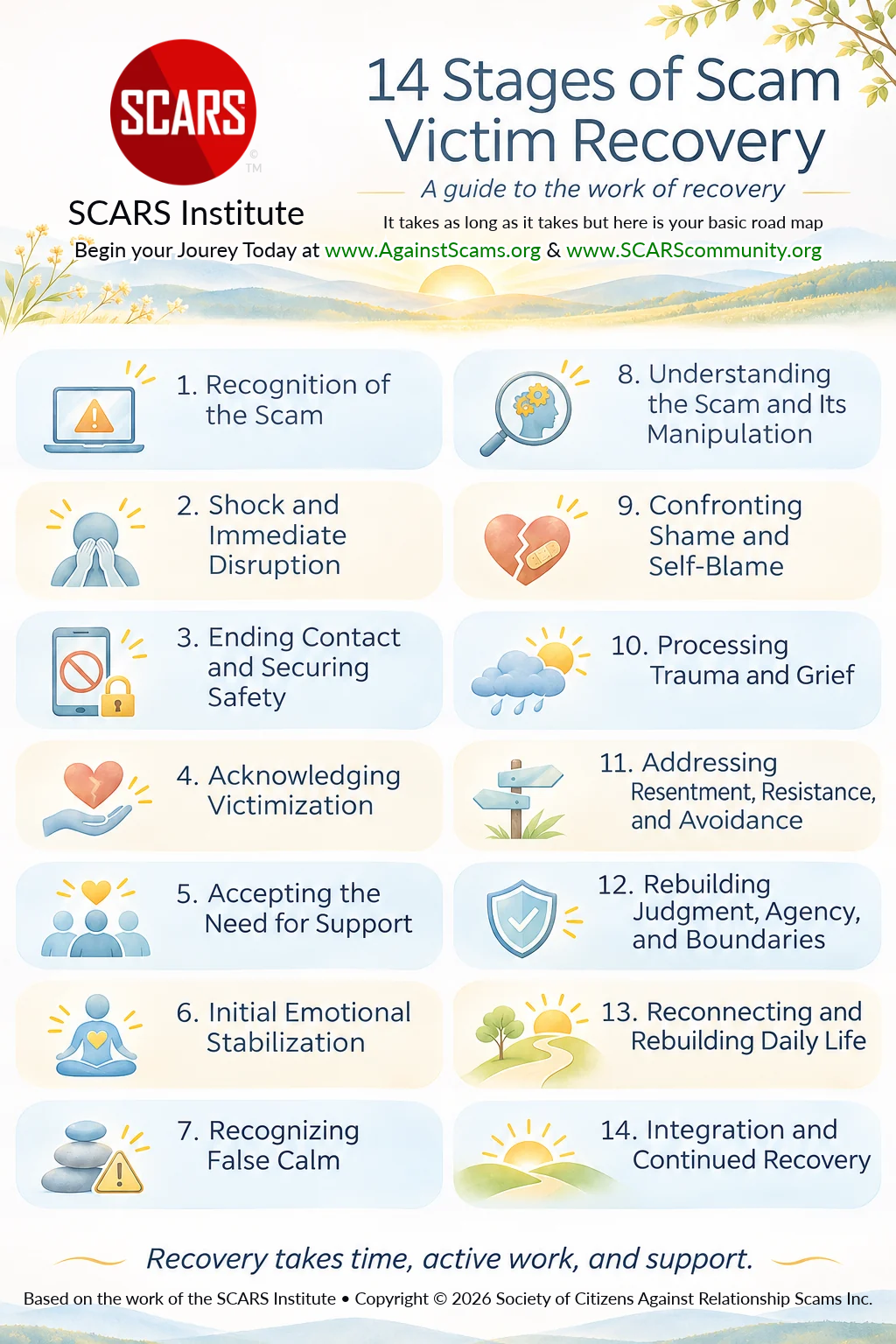
14 Stages of Scam Victim Recovery
The following are the 14 stages of Scam Victim Recovery from the discovery of the fraud onwards. It offers an expanded description of scam victim recovery based on the SCARS Institute’s approach and the experiences of more than 13 million scam victims and survivors.
The stages describe a general progression, but recovery does not always follow a rigid schedule. A survivor can experience several stages at the same time, return to earlier work, or spend different lengths of time addressing each area. The work within each stage builds a foundation for the work that follows.
PLEASE NOTE: This will be hard for new victims to see and comprehend, but this just lets them know that there is a pathway through this and that we can help them to move through it.
1. Recognition of the Scam
Recovery begins when the victim recognizes that a crime has taken place and that the relationship, opportunity, or situation was built on deception. For some, recognition arrives through a direct disclosure or an unmistakable discovery. For others, it develops gradually as contradictory details accumulate and explanations no longer make sense.
Recognition often produces a struggle between what the victim believed and what the evidence reveals. A person who believed they had formed a loving relationship must confront the fact that a criminal controlled the interaction. A person who believed they were investing through a legitimate platform must face the possibility that the account, profits, and professional contacts were fabricated.
The mind does not always accept this information immediately. The victim may continue searching for an innocent explanation or hope that some part of the experience remains genuine. These responses reflect the difficulty of adjusting to a sudden collapse of trust and understanding.
At this stage, the victim benefits from clear factual information and the support of people who understand how scams operate. Recognition establishes the starting point for protective action and creates the opportunity to address what happened.
2. Shock and Immediate Disruption
Once the victim recognizes the scam, the emotional and physical effects can be overwhelming. Shock often disrupts concentration, memory, sleep, appetite, and the ability to make ordinary decisions. The person may feel numb and detached at one moment, then frightened, angry, or grief-stricken the next.
The discovery can also disturb the victim’s sense of time and safety. Familiar surroundings feel different because the person no longer trusts their own understanding of what happened. Simple responsibilities, such as answering a message or preparing a meal, require more effort than usual because so much attention is directed toward the crime and its consequences.
Some victims feel an urgent need to investigate every detail, contact the criminal, recover their money, or explain what happened to others. That urgency can lead to exhaustion and increase vulnerability to additional manipulation. A slower, organized response helps reduce the number of decisions the person faces at once.
Immediate support focuses on safety, basic physical needs, and practical assistance. The victim benefits from calm communication, manageable steps, and help from trusted people. When distress becomes severe or the person cannot maintain basic safety, professional attention is needed.
3. Ending Contact and Securing Safety
The victim begins protecting themselves by ending contact with the criminals and securing areas the criminals have accessed or influenced. This includes blocking communication channels, protecting financial accounts, changing compromised credentials, and following appropriate guidance for devices and personal information.
Ending contact can be emotionally difficult when the criminal has created a strong attachment. The victim may still want an explanation, an apology, or proof that some part of the relationship was real. Each new exchange gives the criminal another opportunity to manipulate those feelings, apply pressure, or introduce a new deception.
Safety also requires attention to recovery scams. Other criminals, and sometimes the same criminal under a different identity, approach victims with promises to recover money, identify perpetrators, or provide special legal or investigative assistance. These offers often exploit the victim’s urgency and desire to undo the loss.
Practical protection extends beyond a single day. The survivor needs to review accounts, records, communication methods, and information shared during the scam. Working with financial institutions, law enforcement, and qualified technical or legal professionals helps the victim make decisions based on verified guidance.
Establishing safety gives the survivor room to begin emotional recovery. It reduces the immediate opportunities for continued exploitation while helping restore a sense of control over daily life.
4. Acknowledging Victimization
Acknowledging victimization means accepting that another person committed a crime through deception and manipulation. The victim begins to understand the experience as more than a misunderstanding, a disappointing relationship, or an ordinary financial setback. This recognition gives the person a more accurate basis for deciding what help and recovery work are needed.
Acceptance can be difficult because it changes the meaning of events the victim remembers as important or comforting. A conversation once understood as an expression of love becomes part of a criminal strategy. An investment once viewed as an opportunity becomes evidence of a fraud. The victim must reconcile those memories with information that contradicts what they believed at the time.
Acknowledging the crime also brings responsibility into focus. The criminal bears responsibility for the deception and theft. The victim remains responsible for the decisions and actions taken during recovery, including seeking reliable information, protecting themselves, and addressing practical consequences.
This stage often includes reporting the crime, preserving evidence, and speaking openly with trusted people. Those actions help the victim move from private confusion toward a clearer understanding of the experience.
Acknowledgment is an ongoing process. New information about the scam can reveal additional losses or manipulation, requiring the survivor to revisit and deepen their understanding.
5. Accepting the Need for Support
The victim recognizes that recovery requires sustained attention and that knowledgeable support has a place in the process. This includes accepting help with emotional distress, practical decisions, education, and the rebuilding of daily life. Depending on the individual’s needs, support may include a structured community, a recovery program, counseling, or trauma therapy.
Seeking help often requires overcoming shame. The victim may fear being judged, blamed, or misunderstood, especially after receiving dismissive responses from family, friends, financial institutions, or law enforcement. Choosing an informed support environment gives the person a place to speak honestly and learn from people who understand scam victimization.
Accepting support also involves participation. Reading material, attending a group, completing exercises, asking questions, and applying guidance all require effort from the survivor. The process becomes more effective when the person moves beyond seeking reassurance and engages with the work needed to understand and address the harm.
Guidance will sometimes challenge the survivor’s assumptions or preferred course of action. Learning to listen, consider the information, and discuss concerns is part of accepting support. The survivor retains responsibility for their decisions while recognizing the value of professional knowledge and experience.
This stage establishes a working relationship between the survivor and the people or programs supporting recovery.
6. Initial Emotional Stabilization
The survivor begins developing ways to manage distress and maintain a more reliable daily routine. Emotional stabilization includes recognizing signs of overwhelm, reducing immediate pressures where possible, and practicing skills that help the person return to a manageable state after becoming upset.
Basic routines play an important role. Regular meals, sleep, movement, personal care, and contact with trusted people give the survivor a structure during a period when life feels uncertain. These activities do not remove the trauma, but they support the physical and emotional capacity needed to address it.
The survivor also learns to notice personal warning signs. A racing heart, sleeplessness, repetitive checking, angry messages, or withdrawal from others can indicate rising distress. Recognizing these changes early creates an opportunity to use grounding skills, pause a difficult conversation, or seek help before the reaction intensifies.
Stabilization includes learning which practices are suitable for the individual. Some people benefit from breathing exercises or quiet reflection, while others feel steadier when walking, looking around the room, or talking with someone they trust. A trauma-informed professional can help identify approaches that fit the person’s needs.
Feeling more stable creates a foundation for deeper recovery work. Trauma, grief, shame, and practical consequences still need attention as the survivor becomes better able to address them.
7. Recognizing False Calm
As the initial intensity of distress decreases, the survivor often experiences relief. Sleep improves, the immediate crisis feels less urgent, and ordinary activities become more manageable. These changes represent valuable progress, but they can also create the impression that recovery is complete.
False calm develops when reduced emotional intensity is mistaken for the resolution of trauma, grief, and the habits that developed during the scam. The survivor may stop participating in support, discontinue learning, or conclude that further work is unnecessary. Difficult subjects remain unexamined because the person feels better when they avoid them.
This stage can also bring premature confidence. A survivor may believe they now recognize every scam or that the experience alone has made them immune to manipulation. Without further education and practice, confidence can grow faster than the knowledge and judgment needed to support it.
Recognizing false calm requires an honest review of both feelings and functioning. The survivor examines whether they are applying what they learn, addressing unresolved losses, accepting guidance, and responding differently to risk. A period of greater comfort offers an opportunity to continue that work with more emotional capacity.
Remaining engaged during this stage helps the survivor build on early improvements instead of treating temporary relief as the end of recovery.
8. Understanding the Scam and Its Manipulation
The survivor studies how the criminal designed and carried out the deception. This includes examining how contact began, how credibility developed, what information the criminal collected, and how the criminal used trust, emotion, urgency, or authority to influence decisions.
Understanding the process helps the survivor see events in sequence. A message that seemed spontaneous may have followed a deliberate effort to establish contact. Repeated expressions of affection or concern may have strengthened an attachment that the criminal later exploited. A fabricated emergency or investment opportunity may have created pressure to act before the victim had time to verify the facts.
This learning helps replace confusion with a more accurate account of the crime. It also reveals how the criminal adapted to the victim’s responses and circumstances. The survivor begins to understand why individual decisions made sense within the false reality the criminal had created.
Education requires more than collecting information about scam tactics. The survivor benefits from applying that knowledge to their own experience, discussing questions with knowledgeable people, and identifying points at which verification or outside guidance would have helped.
The purpose is to develop understanding and stronger judgment. The survivor studies the criminal’s actions while maintaining a clear distinction between the deception imposed by the criminal and the decisions they will make in the future.
9. Confronting Shame and Self-Blame
Shame often leads the survivor to believe that the scam revealed a permanent defect in their character. The person may see themselves as stupid, weak, unlovable, or incapable of making good decisions. These beliefs can become more damaging when they discourage the survivor from speaking honestly or seeking help.
Self-blame frequently grows from hindsight. Once the survivor knows the outcome, earlier warning signs appear more obvious than they did during the deception. The person judges past decisions using information that was unavailable or understood differently at the time. This process can produce relentless questions about what they “should have known.”
Confronting shame requires examining those judgments carefully. The survivor identifies what the criminal did, what the victim understood at the time, and how manipulation influenced the choices available to them. This work supports a factual assessment of the experience and reduces the tendency to turn a criminal act into a verdict about personal worth.
The survivor also learns the difference between blame and responsibility. The criminal is responsible for the crime. The survivor is responsible for participating in recovery, learning from the experience, and making informed decisions going forward.
Discussing shame with a qualified therapist or an informed support community helps the survivor challenge secrecy and develop a more accurate understanding of the crime.
10. Processing Trauma and Grief
Scam victims often face several losses at the same time. Financial loss can affect housing, retirement, employment, and family security. Relationship scams can also produce grief for a person who seemed real, a relationship that carried emotional meaning, and a future the victim believed was possible.
The survivor may also grieve changes in their sense of safety, confidence, trust, and identity. A person who previously saw themselves as independent and capable can struggle to reconcile that self-image with the experience of being deceived. These losses deserve attention even when others focus only on the money.
Trauma processing involves understanding and working through the effects of the experience rather than repeatedly reliving it without support. The survivor learns to recognize triggers, understand emotional and physical reactions, and gradually develop a more integrated account of what happened.
Grief requires room as well. The survivor can acknowledge that their feelings were real while accepting that the criminal misrepresented the relationship. Processing both realities helps the person face the loss without continuing to rely on the criminal’s false story.
When symptoms remain severe, interfere with daily life, or overwhelm the survivor’s ability to cope, a qualified trauma therapist can provide assessment and treatment. Supportive recovery work and professional therapy each contribute according to the person’s needs.
11. Addressing Resentment, Resistance, and Avoidance
The survivor examines patterns that interfere with continued recovery, including persistent resentment, withdrawal, refusal to consider guidance, or avoidance of painful material. These patterns often begin as responses to genuine hurt, fear, disappointment, or frustration. Over time, they can reduce participation and prevent the survivor from addressing problems that need attention.
Resentment may become directed toward the criminal, family members, institutions, support providers, or other survivors. When the person repeatedly returns to perceived wrongs without working through them, resentment can occupy attention that recovery requires. It can also affect relationships and make constructive conversations increasingly difficult.
Resistance appears when the survivor dismisses guidance, rejects all feedback, or treats every challenge as a personal attack. Avoidance occurs when the person repeatedly stays away from emotions, information, responsibilities, or activities connected with the scam. Both patterns can provide temporary relief while leaving the underlying difficulties in place.
Addressing these patterns requires honest reflection. The survivor identifies what they are avoiding or resisting, considers the effect on their recovery, and discusses the difficulty with a qualified professional or knowledgeable support provider.
A trauma therapist can help when resentment, resistance, or avoidance becomes persistent or overwhelming. Continued progress depends on recognizing these barriers and taking practical steps to work through them.
12. Rebuilding Judgment, Agency, and Boundaries
The survivor begins rebuilding confidence through the repeated practice of making informed decisions. This process includes gathering evidence, checking assumptions, considering consequences, and seeking guidance when a situation falls outside their experience. Confidence becomes more reliable as it grows alongside knowledge and demonstrated skills.
Judgment also requires awareness of emotional pressure. A request that produces urgency, fear, excitement, or a strong desire to please deserves time and careful review. The survivor learns to pause, verify important claims independently, and consult a trusted person before making significant financial or personal commitments.
Agency develops as the person takes responsibility for decisions and actions in daily life. It includes choosing goals, following through on commitments, and correcting mistakes. Accepting guidance remains part of agency because informed decisions often depend on knowledge and perspectives the individual does not possess alone.
Boundaries provide practical protection in relationships and communication. The survivor learns to recognize pressure, state limits, and respond when another person disregards those limits. This includes boundaries around money, personal information, time, and emotional demands.
Rebuilding judgment takes practice rather than a single decision to trust oneself again. The survivor applies what they learn in ordinary situations, reviews the results, and continues developing skills that support greater independence and safety.
13. Reconnecting and Rebuilding Daily Life
The effects of a scam often reach into family life, friendships, work, finances, and daily routines. Rebuilding involves identifying which areas have been disrupted and taking practical steps to restore stability. The survivor works on problems in a manageable order instead of expecting every part of life to improve at once.
Relationships may need attention after secrecy, financial losses, conflict, or withdrawal. The survivor can begin by communicating honestly, listening to concerns, and recognizing that rebuilding trust takes time. Some relationships become stronger through this work, while others require clearer limits or outside assistance.
Reconnection also involves returning to activities that give daily life structure and meaning. The survivor may resume a hobby, participate in a community activity, spend time with supportive friends, or take on responsibilities that were neglected during the crisis. These actions help restore participation in life beyond the scam.
Financial rebuilding often requires its own plan. Reviewing obligations, identifying resources, and obtaining qualified financial guidance can help the survivor make informed decisions about what comes next. Progress in this area depends on the person’s circumstances and available resources.
The survivor continues applying the lessons of recovery while reestablishing relationships, routines, and responsibilities. Reconnection grows through consistent actions that support safety, trust, and participation.
14. Integration and Continued Recovery
Integration develops as the survivor incorporates an accurate understanding of the scam into their life history. The crime remains something that happened to them, with consequences that deserve recognition and attention. It no longer needs to dominate every decision, relationship, or thought about the future.
The survivor understands more clearly how the scam operated, how it affected them, and what they have done to address its consequences. Memories and reminders may still arise, but the person has developed ways to recognize those reactions and respond without allowing them to direct every action.
Continued recovery includes maintaining the practices that support emotional stability, sound judgment, and healthy relationships. The survivor keeps learning, reviews decisions when new risks arise, and seeks professional or community support when needed. Earlier work remains useful when a new challenge brings grief, shame, or uncertainty back into awareness.
Integration also includes accepting that some consequences require long-term attention. Financial obligations, changes in relationships, or emotional reactions do not always disappear on the same schedule. The survivor continues addressing those realities while participating in the rest of life.
Recovery becomes an ongoing practice of applying knowledge, maintaining stability, and taking responsibility for the future. The survivor carries forward a fuller understanding of the experience and uses that understanding in daily decisions.
3 Comments
Leave A Comment Cancel reply
This site uses Akismet to reduce spam. Learn how your comment data is processed.



I really like the way the 14 steps are laid out with each one explaining more about that specific stage. It not only helps me to look at the recovery process this way, but I think it would be very useful to show to friends or family members so they can better understand the total scam recovery process and how it works.
Thank you. This has come from a dozen years of exploration and our understanding from over 13 million other victim/survivors.
The successive stages of the recovery process are presented in a visually excellent way and explained clearly.
A very good guide for victims embarking on their own recovery journey.