

SCARS Institute Insight
The Scam Victim Recovery Pathway
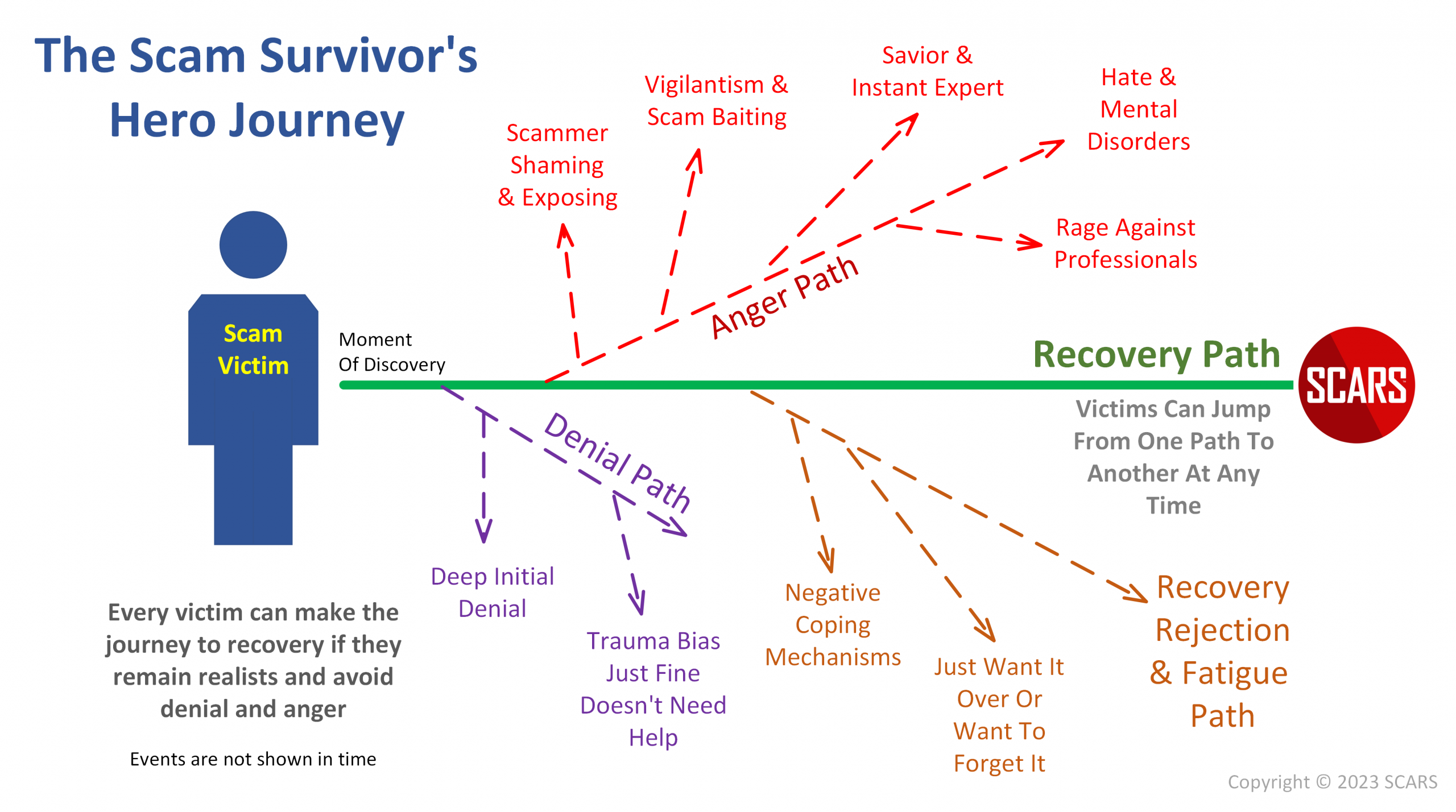
“The Scam Survivor’s Hero Journey” illustrates the complex recovery journey that scam victims often undertake.
It highlights the critical juncture at the “Moment of Discovery,” where the victim first realizes they have been scammed, and the subsequent paths they may take toward recovery or further distress. Understanding this journey is crucial for both victims and their support networks, as it underscores the importance of staying on the path to recovery and the dangers of veering off course.
At the “Moment of Discovery,” the victim is confronted with the harsh reality of their situation. This moment is pivotal, as it sets the stage for the various paths they may choose to follow. The primary goal is to guide the victim toward the “Recovery Path,” which leads to healing and restoration. However, the journey is fraught with potential detours and pitfalls that can hinder or even derail the recovery process.
One of the initial dangers is the “Denial Path.” This path is characterized by deep initial denial, where the victim refuses to accept the reality of the scam. They may exhibit trauma bias, insisting that they are “just fine” and do not need help. This denial can manifest in various negative coping mechanisms, such as avoidance, rationalization, or minimization of the scam’s impact. The victim may also express a desire to simply forget the experience, hoping that time will heal all wounds without active intervention. This path is treacherous because it prevents the victim from confronting and processing their trauma, leaving them stuck in a cycle of avoidance and unresolved pain.
Another perilous detour is the “Anger Path.” This path is marked by intense emotions such as scammer shaming and exposing, vigilantism, and scam baiting. The victim may adopt the role of a savior or instant expert, driven by a misplaced sense of justice or a need to protect others. This path can lead to rage against professionals who are trying to help, as well as the development of hate and mental disorders stemming from unprocessed anger and bitterness. The anger path is dangerous because it consumes the victim’s energy and focus, diverting them from the healing process and potentially causing further harm to their mental and emotional well-being.
The “Recovery Rejection & Fatigue Path” is another significant risk. This path occurs when the victim, after initially engaging in the recovery process, becomes overwhelmed by the effort required. They may feel that the process is too difficult or that they have already invested too much time and energy without seeing immediate results. This path is characterized by a sense of fatigue and rejection of the recovery efforts, leading the victim back into a state of stagnation or even regression.
The truth of the diagram emphasizes that victims can jump from one path to another at any time, highlighting the dynamic and non-linear nature of the recovery journey. It is essential for victims and their support networks to recognize these potential detours and provide guidance and encouragement to help the victim stay on the “Recovery Path.” This path, while challenging, offers the best chance for the victim to heal, regain their sense of self, and move forward with their lives.
Always remember, the scam victim’s recovery journey is a complex and delicate process that requires awareness, support, and a commitment to staying on the path to healing. The dangers of veering off course are real and can have profound negative impacts on the victim’s well-being. By understanding these potential pitfalls and providing the necessary support, we can help scam victims navigate their journey toward recovery and ultimately reclaim their lives.
Find more insights here: https://scamsnow.com/scars-institute-scam-victim-recovery-insights/
SCARS Institute Management
December 2025


Leave A Comment